
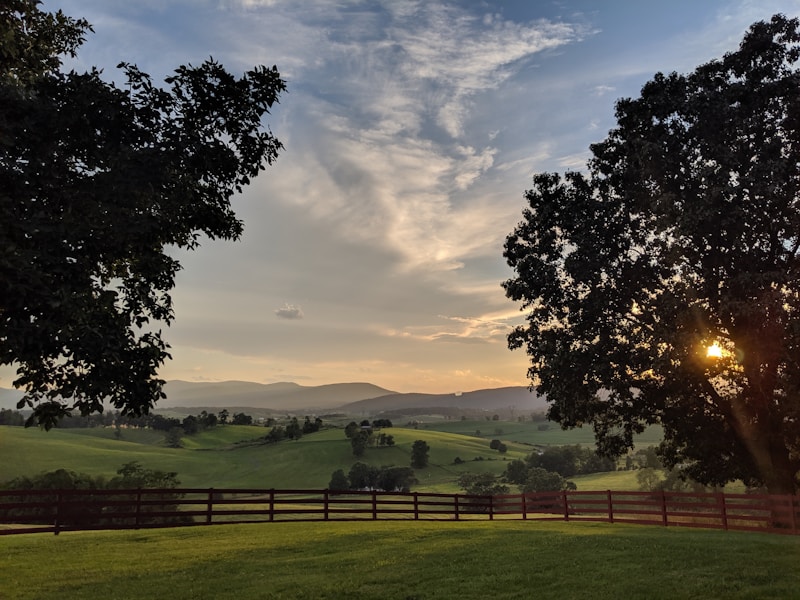
If you follow national real estate headlines, you would be forgiven for thinking no one is moving anywhere. But pull the camera back and look at what is actually happening in Harrisonburg, Virginia, and the picture looks different.
People are coming here. They are staying. And there are real, concrete reasons for it.
This is not a piece about interest rates or market timing. It is about the city itself: what makes Harrisonburg worth choosing, and why buyers from Northern Virginia, the D.C. corridor, and points beyond keep landing in the Shenandoah Valley and not looking back.
The Economic Foundation Nobody Talks About Enough
Harrisonburg's economic story starts with James Madison University, and it does not stay on campus for long.
JMU's latest economic impact report found the university generated $593 million in economic impact in the Harrisonburg metropolitan area, with students alone contributing an estimated $200 million directly into restaurants, groceries, housing, and local services (not counting tuition). That spending supports an estimated 1,200 additional jobs across the city, and the university brings in roughly 300,000 visitors every year: a steady stream that sustains hotels, restaurants, and retail businesses through every season.
Pierce Macgill with Harrisonburg Economic Development described it plainly in a WHSV report from September 2026: "We are kind of like the old General Motors factory town except our factory is never gonna close."
The university's own strategic plan, called the Madison Promise, sets a target of $2 billion in economic impact on the commonwealth by 2040, according to Virginia Business. That is not a vanity goal. It reflects a university actively expanding its footprint in research, health sciences, and community partnerships.
For anyone evaluating where to put down roots, a city with a stable, growing economic anchor is a fundamentally different bet than one without one.
New Industry Coming to the Valley
In June 2026, Governor Abigail Spanberger announced that MSolar Manufacturing, a Virginia-based startup, will invest $23,775,000 to build a 56,000-square-foot solar panel manufacturing facility in Mount Jackson, Shenandoah County, just up the Valley from Harrisonburg. The facility is expected to create 150 new jobs in the region.
This is not a back-office operation or a warehouse. It is a vertically integrated manufacturing plant producing high-efficiency solar modules for large-scale energy projects. MSolar CEO Michael O'Connor described the facility as "the first step in our long-term strategy to expand domestic solar production," with plans to grow from this Virginia location.
For a region historically anchored by agriculture and university employment, the arrival of a precision manufacturing company signals where the Valley's economy is heading.
Downtown Harrisonburg: Real Investment, Real Change
It is easy to hear "vibrant downtown corridor" and assume a marketing pitch. Harrisonburg's downtown actually delivers: a walkable grid of locally owned restaurants, breweries, music venues, and shops anchored by the Harrisonburg Farmers Market.
And the investment is continuing. In August 2026, the Harrisonburg City Council approved rezoning for The Lindsey, a 4-story mixed-use building planned for South Main and South Liberty Streets, on the former Lindsey Funeral Home property. The project, approved 3-2, will bring additional housing and street-level commercial space to a block near the center of downtown. The building's maximum height was set at 52 feet, with structured parking capacity adjusted as part of the approval process.
Earlier this month, the Kids Castle playground at Purcell Park reopened after a $3 million-plus renovation: another example of the city investing in community infrastructure alongside commercial development.
The Outdoors: A Genuine Differentiator
Remote workers can live almost anywhere with a solid internet connection. The ones who end up in Harrisonburg often cite the same thing: you can be on a mountain trail in 20 minutes.
Harrisonburg sits at the center of some of the best outdoor recreation on the East Coast. Shenandoah National Park and Skyline Drive are within easy reach, with peak fall foliage arriving in early to mid-October. The George Washington and Jefferson National Forests wrap around the Valley with hundreds of miles of trails. The Appalachian Trail passes through. Hightop Peak, Old Rag Mountain, and High Knob are all reasonable day hikes from the city.
The Valley's equestrian culture, cycling, fishing, and kayaking options expand the picture further. This is a city where your weekend options are not a two-hour drive in search of some green space: they are right out the door.
The Cost of Living Argument
If you are coming from Northern Virginia, the math is hard to ignore.
Northern Virginia runs 28 to 35 percent above the national average cost of living, according to a 2026 city-by-city breakdown from myrelocationsavings.com. Harrisonburg runs 7 percent below the national average. That is a significant gap in everyday expenses before you ever factor in housing.
On housing: the median home price in Harrisonburg is around $317,000, up 6.4 percent year over year as of August 2026, according to Redfin. Detached single-family homes have a median closer to $399,000, up 2 percent over the same period. These are not bargain-basement numbers, but they are a very different conversation than Northern Virginia's price points, where entry-level detached homes in many ZIP codes start well north of $600,000.
For buyers who have built careers in expensive markets, equity in a Northern Virginia condo can often translate to a comfortable detached home with a yard in the Friendly City.
A Market That Has Held Steady
Home values in Harrisonburg have appreciated steadily without the volatility that characterizes some larger markets. The combination of university demand, regional job growth, and relatively limited new construction has kept supply tight and prices firm.
This is a market where buying when you are ready tends to make more sense than waiting for a dip. Owners who bought in previous cycles and stayed have generally seen their positions improve. The fundamentals for that trajectory are still in place.
If you are considering Harrisonburg and want to understand what is available in your price range, the team at Kline May Realty knows this market from the inside. We are locally owned, we have been here through multiple cycles, and we are happy to help you figure out whether the Friendly City is the right fit.
Start at klinemay.com, or reach out to talk through what you are looking for.
Kline May Realty is a locally owned real estate firm serving Harrisonburg, Rockingham County, and the greater Shenandoah Valley.
Sources: WHSV, "Beyond campus: JMU's economic impact on Harrisonburg's economy," whsv.com (September 1, 2026); Virginia Business, "JMU eyes $2 billion economic impact by 2040," virginiabusiness.com (August 2, 2026); Governor of Virginia press release, MSolar Manufacturing, governor.virginia.gov (June 4, 2026); Rocktown Now, "Harrisonburg City Council approves 'The Lindsey' apartment complex," rocktownnow.com (August 26, 2026); Redfin, Harrisonburg home price data (August 2026); myrelocationsavings.com, "Cost of Living in Virginia 2026: City-by-City Breakdown" (April 2026); Harrisonburg Tourism, visitharrisonburgva.com
Posted by Kline May Realty on
Leave A Comment